











Diesel exhaust fluid (DEF) is also commonly known as AdBlue. It is an aqueous urea solution and is widely used in modern diesel engine trucks to help reduce their nitrogen oxide emissions. Since it’s introduction it has become common for AdBlue to be handled, stored and dispensed wherever diesel trucks and engines are fuelled or maintained.
Unlike diesel and engine oil, AdBlue is a water-based liquid. This means standard oil-only spill kits, which contain water-repellent absorbents, aren’t suitable for cleaning up AdBlue spills.
Although AdBlue isn’t normally classified as hazardous under chemical classification regulations, larger spills can still pose environmental risks, particularly if the liquid enters drains or nearby watercourses.
That’s why it’s important to have suitable spill control equipment available wherever AdBlue is stored, handled or dispensed. A dedicated AdBlue spill kit provides compatible absorbents to help contain and clean up spills safely.
AdBlue leaks, drips or spills, have the potential to harm the environment, and also may affect personal safety in the workplace.
An appropriate Spill Kit is essential to contain and control the spill within a certain area. Such a spill kit will not react with the liquids it is designed to control and allows responders to confidently deal with the leak or spillage.
Diesel refuelling sites typically use oil and fuel spill kits which contain hydrophobic (water-repellent) absorbents. These absorbents are not suitable for use with AdBlue.
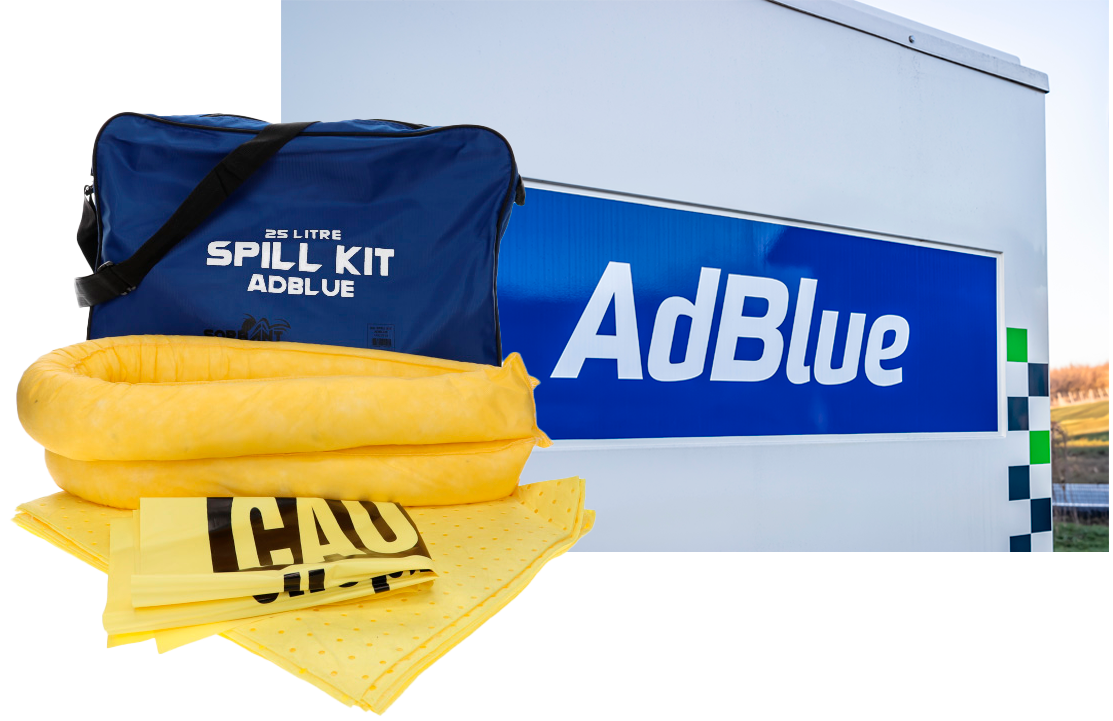
Our range of AdBlue Spill Kits are conveniently labelled and packed in blue bags for easy recognition. The kits contain a variety of all-liquid, polypropylene absorbents colour-coded grey (differentiating them from our white oil and fuel absorbents).
| Feature | Oil-Only Spill Kit | AdBlue Spill Kit |
|---|---|---|
| Diesel and engine oil | Suitable | Depends on absorbent specification |
| Hydraulic oil | Suitable | Depends on absorbent specification |
| AdBlue | Not suitable | Suitable |
| Water-based liquids | Generally unsuitable | Suitable where specified |
| Absorbent properties | Hydrophobic | Compatible with water-based liquids |
| Typical absorbent colour | White | Often grey |
This article was originally published 5 August 2019. Updated November 2026 to reflect current AdBlue handling and spill control guidance.