














Selecting the Correct EP2 Grease - Buyer’s Guide for Engineers
By Travis Knappett, Kompo® Oil & Grease Specialist at HTS Spares.
EP2 grease is one of the most widely used lubricants in industrial machinery, transport equipment, agricultural systems, and construction plant. Despite its popularity, we’re often asked:
How do I choose the right EP2 grease for my job?
Selecting the correct grease is critical because lubrication failure is responsible for a large percentage of bearing and mechanical component failures in industrial equipment. According to guidance from organisations such as the National Lubricating Grease Institute, proper grease selection and maintenance can dramatically extend equipment life and reduce downtime.
This guide explains the key factors engineers should consider before purchasing EP2 grease.
What Is EP2 Grease?
EP2 grease is a multi-purpose extreme pressure grease designed to protect moving components under high load and shock conditions.
The name contains two important specifications:
EP – Extreme Pressure
Extreme pressure additives form a protective layer on metal surfaces when loads increase, helping prevent wear, scoring, and metal-to-metal contact.
2 – NLGI Grade 2
The “2” refers to the NLGI consistency grade, defined by the National Lubricating Grease Institute classification system.
NLGI Grade 2 greases have a medium consistency similar to peanut butter and are suitable for most bearings and general lubrication points.
Because of this balance between pumpability and staying power, EP2 grease is the most commonly used grease grade in industrial maintenance.
Where EP2 Grease Is Commonly Used
EP2 grease is suitable for many heavy-duty applications, including:
- Rolling element bearings
- Wheel bearings
- Agricultural machinery
- Construction equipment
- Conveyor systems
- Universal joints
- Industrial motors
- Chassis lubrication points
Its versatility is why it’s often considered a general-purpose industrial grease.
Key Factors When Choosing EP2 Grease
1. NLGI Consistency Grade
The first specification to check is grease consistency.
The NLGI system measures how thick or soft grease is.
| NLGI Grade | Consistency | Typical Uses |
| 0 | Semi-fluid | Central lubrication systems |
| 1 | Soft | Cold environments |
| 2 | Medium | General bearings & machinery |
| 3 | Firm | Slow heavy equipment |
EP2 grease sits in the middle of this scale, offering a balance between:
- Fluidity through grease guns
- Staying in place during operation
2. Load and Pressure Resistance
Extreme pressure additives allow grease to handle heavy loads.
These additives activate when surfaces experience high stress, creating a chemical protective film that prevents metal surfaces from welding or scuffing.
Applications requiring EP grease typically include:
- Shock loading
- High torque
- Slow-moving heavy components
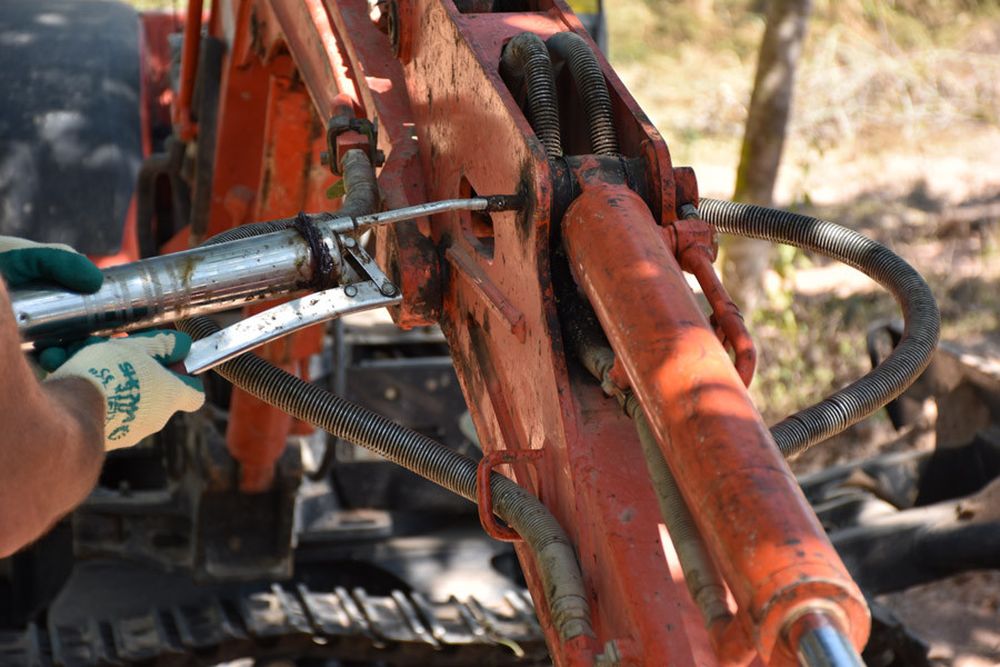
Examples include excavator pins, loader bearings, and industrial drive systems.
3. Operating Temperature Range
Temperature plays a major role in grease performance.
Most EP2 greases typically operate between approximately −20°C to +140°C. However, the exact range depends on the grease formulation.
Important specifications include:
Dropping point - The temperature at which grease begins to liquify.
Oxidation stability - Resistance to chemical breakdown at high temperature.
Low-temperature pumpability - How easily grease flows in cold conditions.
Machines working in hot environments or high-speed bearings may require specialised formulations.
4. Water Resistance
Water contamination is a major cause of lubrication failure.
Quality EP2 greases provide strong resistance to:
- Water washout
- Rust formation
- Corrosion of bearings
This makes them suitable for:
- Outdoor machinery
- Agricultural equipment
- Marine environments
- Washdown facilities
5. Additive Package
The additive system within grease significantly affects performance.
High-quality EP2 grease often includes:
Anti-wear additives - Reduce friction between metal surfaces.
Extreme pressure additives - Protect against high loads.
Rust inhibitors - Prevent corrosion.
Oxidation inhibitors - Improve grease life.
Some heavy-duty greases also include molybdenum disulfide (moly) for extreme load protection.
6. Base Oil Viscosity
Grease performance also depends on the base oil.
Higher viscosity oils perform better under heavy load, while lower viscosity oils are better for high-speed applications.
For example:
| Application | Preferred Oil Type |
| Electric motors | Lower viscosity |
| Heavy construction equipment | Higher viscosity |
| Agricultural machinery | Medium viscosity |
7. Grease Compatibility
Mixing greases incorrectly can cause lubrication failure as different thickener types can react negatively when combined. Common grease thickener types include:
- Lithium
- Lithium complex
- Calcium
- Polyurea
If switching grease types, manufacturers typically recommend fully purging old grease first.
If you have any queries, or you're unsure which EP2 grease is best for the job, please get in touch by phone or email: 01432 373350 / travis.knappett@htsspares.com. Or feel free to message me on LinkedIn.
Common EP2 Grease Questions
What does EP2 mean in grease?
EP2 grease refers to extreme pressure grease with NLGI Grade 2 consistency, suitable for most industrial lubrication applications.
What is EP2 grease used for?
EP2 grease is commonly used in bearings, wheel hubs, construction equipment, agricultural machinery, and industrial motors.
Is EP2 grease waterproof?
Most EP2 greases provide strong water resistance, helping protect components from corrosion and washout.
Can EP2 grease be used for wheel bearings?
Yes. EP2 grease is commonly used for automotive and plant wheel bearings, provided the temperature rating is appropriate.
![Tyre Puncture Repair Guide for Construction Machinery [Product Discounts Inside]](https://media.htsspares.com/QzBEo8v37TufH6AWMSCPsModwf0=/1000x667/https%3A%2F%2Fwww.htsspares.com%2Fmedia%2Fblog%2F472%2Fthumbnail%2FTyre-Repair-Thumbnail.jpg)