
















Prevent Your Site Being Shut Down - The HSE Silica Dust Crackdown Explained
By Kingsley Knappett, Sales Manager at HTS Spares
If you work with engineered stone, concrete, brick or masonry (or your customers do) the new HSE inspection campaign is something you cannot afford to ignore. From May 2026, Health and Safety Executive inspectors are conducting more than 1,000 visits to construction sites and fabrication workshops across Great Britain. Sites found to be breaching the rules face an immediate Prohibition Notice, stopping work on the spot.
Here is what you need to know.
What Is Silica Dust - and Why Is It So Dangerous?
Crystalline silica is a natural mineral found in most common building materials: concrete, brick, mortar, sandstone, granite, and engineered stone. When these materials are cut, drilled, chased or ground, they release fine airborne particles known as Respirable Crystalline Silica (RCS).
RCS particles are invisible to the naked eye and small enough to penetrate deep into the lungs, where the body cannot remove them. Breathing in RCS over time causes silicosis - an incurable, progressive scarring of the lung tissue. RCS is also classified as a Group 1 carcinogen by the International Agency for Research on Cancer, meaning it is a confirmed cause of lung cancer. Long-term exposure is also linked to COPD (chronic obstructive pulmonary disease) and kidney disease.
The HSE estimates that around 500 construction workers in the UK die every year from diseases linked to silica dust exposure.
Engineered stone carries a particular risk. It can contain up to 95% crystalline silica. Unlike natural stone, where silica-related disease typically takes decades to develop, exposure to engineered stone dust has caused irreversible lung damage in workers within months.
Two young workers in the UK died from silicosis as a direct result, prompting calls for action from MPs, trade unions and medical professionals.
What Changed in May 2026?
On 11 May 2026, the HSE announced its most significant intervention in the engineered stone sector to date. The package included:
- Publication of the first-ever COSHH guidance sheet specifically for engineered stone
- A nationwide inspection programme of over 1,000 visits to fabricators across Great Britain, running through 2026-27
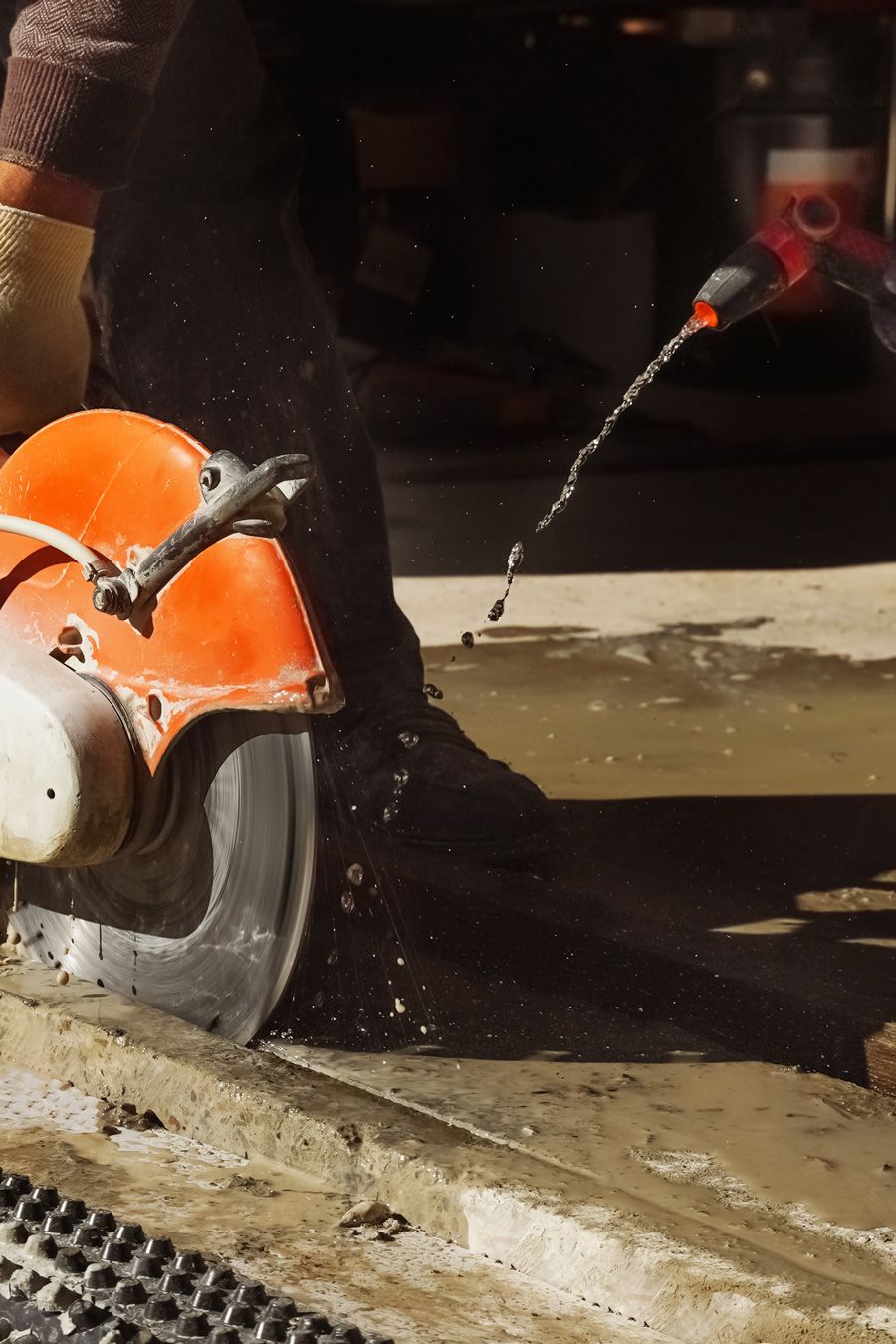
- A clear statement that dry cutting of engineered stone is unacceptable under existing health and safety law
This is not a new law. Work with engineered stone has always been governed by the Control of Substances Hazardous to Health Regulations 2002 (COSHH). What changed is that the HSE published research showing that dry fabrication results in RCS exposure five to ten times higher than wet methods using equivalent tools - and that lower-silica alternatives are available at the same quality. With that evidence on the table, businesses can no longer claim that dry cutting is a reasonable approach.
The legal workplace exposure limit (WEL) for RCS in the UK is 0.1 mg/m³, averaged over an eight-hour working day. As a practical rule of thumb: if workers can see dust in the air while cutting, exposure is already too high.
(Sources: HSE Media Centre, CMS Law, Federation of Master Builders)
It Is Not Just About Stone Fabricators
While the May 2026 announcement was focused on engineered stone, the broader HSE inspection programme covers common construction tasks that plant hire companies and contractors deal with every day. Silica dust is a hazard across a wide range of site activities.
| Task | Estimated Exposure Without Controls | Primary Control Required |
| Dry cutting engineered stone | 5-10x the legal WEL | On-tool water suppression - mandatory |
| Disc cutting concrete or paving slabs | 10-50x the legal WEL | On-tool water suppression or LEV |
| Chasing brickwork or mortar | High | Water suppression plus RPE |
| Drilling into concrete or masonry | High | Vacuum extraction plus RPE |
| Breaking out concrete | High | LEV or water suppression plus RPE |
| Dry sweeping dusty areas | Moderate | Wet sweeping or vacuum |
| Cutting or polishing natural stone | High | Water suppression plus RPE |
LEV = Local Exhaust Ventilation. RPE = Respiratory Protective Equipment. WEL = Workplace Exposure Limit (0.1 mg/m³ 8-hr time-weighted average, per HSE EH40).
(Source: Essential Site Skills, HSE RCS research)
Even tasks that seem brief can accumulate to dangerous exposure levels across a working day. The FMB has warned that many small builders may not be aware of the scale or severity of the crackdown - particularly as demand for engineered stone continues to rise.

What Will HSE Inspectors Look For?
HSE inspectors look at what is actually happening on site - not just what is written in the risk assessment. Key areas of focus include:
- A current and site-specific COSHH risk assessment for silica dust
- On-tool water suppression fitted and in use on disc cutters and other cutting equipment
- Correct RPE - FFP3 disposable masks or half-mask respirators with P3 filters are the minimum standard for most silica-generating tasks; all must be face-fit tested
- Health surveillance records for workers with regular exposure to RCS
- Worker training - can your team explain the risks and the controls?
Simply having equipment available is not enough. Inspectors are checking that controls are being used properly on the day.
How to Stay Compliant - The COSHH Hierarchy of Controls
COSHH requires employers to work through a hierarchy of controls, starting with the most effective:
- Eliminate the source - switch to engineered stone with low silica content, which the HSE confirms is available at no quality penalty
- Substitute - use less hazardous materials where the specific product is not critical
- Engineering controls - fit on-tool water suppression to disc cutters; use local exhaust ventilation where water is not suitable. Engineering controls should be the primary defence, not RPE
- Safe systems of work - plan tasks to reduce cutting time, segregate dusty work from other site activities, and ban dry sweeping
- Respiratory Protective Equipment - FFP3 masks or half-mask respirators with P3 filters as a minimum; powered air purifying respirators (PAPRs) for prolonged exposure; all RPE must be face-fit tested
- Health surveillance - regular lung health checks for anyone with repeated exposure to RCS
What Happens If You Fail an Inspection?
Any business found to be operating in breach of the rules faces immediate enforcement action. The most serious outcome is a Prohibition Notice - work stops on the spot. For construction businesses and plant hire operators, that means missed deadlines, broken contracts, and potential financial penalties that can escalate quickly, as the FMB has noted.
Improvement Notices may be issued where the breach is less immediate, giving a fixed period to put correct controls in place. In serious cases, prosecution and fines are possible.
Disc Cutter Maintenance and Dust Suppression: A Critical Part of Compliance
On-tool water suppression is the primary control for disc-cutting tasks. But water suppression only works if the equipment is properly maintained and actually in use. A blocked nozzle, a worn banjo bolt, a cracked water hose, or a missing blade guard attachment can mean water never reaches the blade - and your operative is cutting dry without realising it.
This is where a reliable supply of spare parts and purpose-built dust suppression equipment matters. Keeping water systems fitted, fully functional, and regularly inspected is not just good maintenance practice - under the current HSE enforcement regime, it is directly linked to your legal compliance.
At HTS Spares, we stock a comprehensive range of water suppression solutions, dust suppression water bottles, and disc cutter parts for the most widely used machines in the UK plant hire and construction market.
Dust Suppression Water Bottles
For jobs where a dedicated water supply is needed alongside your disc cutter, our dust suppression water bottle range includes two standout options:
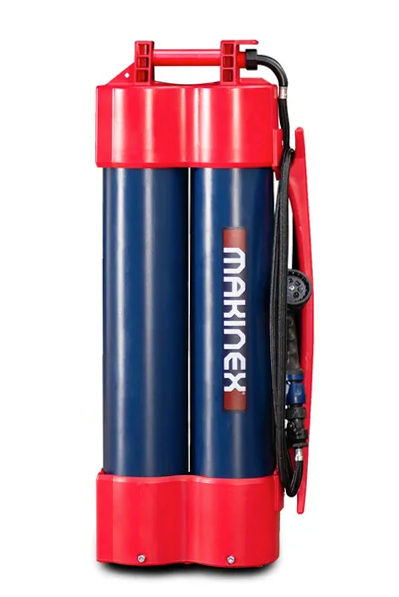
Makinex Hose-2-Go 14L Dust Suppression Water Bottle (HDC4390)
The Hose-2-Go delivers a constant flow of water for cutting, core drilling and grinding concrete - with no pump, no battery and no electronics to break down or go flat. Its pressurised 14-litre capacity provides up to 30 minutes of continuous water flow from a single fill, making it a practical, low-maintenance solution for hire fleets and site operatives alike. If reliability and simplicity are priorities on your sites, this is the bottle to reach for.
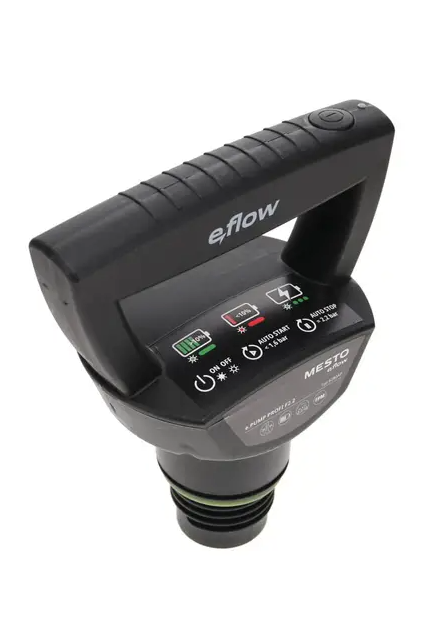
Mesto Rechargeable Electric Pump Compressor for Water Sprayer Bottles (HDC4405)
Already running pressurised disc cutter water bottles on site? The Mesto e.PUMP is a USB-C rechargeable electric compressor that replaces the traditional manual pump handle. It delivers up to 1.4 bar of pressure, auto-shuts off when the right pressure is reached, and restarts automatically when it drops - meaning no second person is needed to keep the bottle pressurised during cutting. With 60 minutes of working time per charge and a weight of just 0.8kg, it is a simple upgrade that removes a common practical barrier to keeping water suppression running properly.
Water Kits and Disc Cutter Spares by Machine
- Stihl TS410 and TS420 disc cutter parts - including water kits with adjusting lever, banjo bolt and hose, and blade guard water attachments for the full TS range
- Stihl TS700 disc cutter parts - support guard and water attachment components
- Stihl TS400 disc cutter spares
Most items are available for next-day delivery when ordered before 4pm - so a failing water kit or flat pump does not have to mean a compliance gap that stretches into the working week.
Summary: What You Need to Do Now
- Review your COSHH risk assessment for silica dust - make sure it is current and site-specific
- Check that water suppression is fitted and operational on all disc cutters used for stone, concrete or masonry cutting
- Confirm your team are wearing correctly face-fit tested RPE for silica-generating tasks
- Source and fit any missing water kit components before your next inspection
- Set up health surveillance for workers with regular RCS exposure
For help finding the right water suppression solution for your fleet, call the HTS Spares team on 01432 373350 or browse our disc cutter parts range and dust suppression water bottles at www.htsspares.com.
Further Reading from HTS Spares
Keeping your fleet compliant and operational is a broader challenge than any single regulation. If this article raised questions about how your spare parts supply chain holds up under pressure, you might find these HTS Spares blog posts useful:
- Spare Parts Challenges for UK Plant Hire Managers in 2026 - a look at the most common supply and maintenance pressures facing hire fleets, with practical solutions
- Next-Day Spare Parts Delivery for UK Plant Hire Companies - how fast parts availability reduces downtime and protects your contracts

Written by
Kingsley Knappett
Sales Manager
kingsley.knappett@htsspares.com
01432 373350
Sources referenced in this article: HSE Media Centre - HSE says no dry cutting of engineered stone, Federation of Master Builders - Silica dust: What the new HSE inspections mean for your business, CMS Law - Cutting it out: the HSE cracks down on engineered stone dust, Essential Site Skills - HSE Silica Dust Crackdown: What Construction Businesses Should Know, SwiftRMS - COSHH Assessment for Silica Dust: Step-by-Step UK Guide, HSE COSHH Construction Silica guidance sheets